

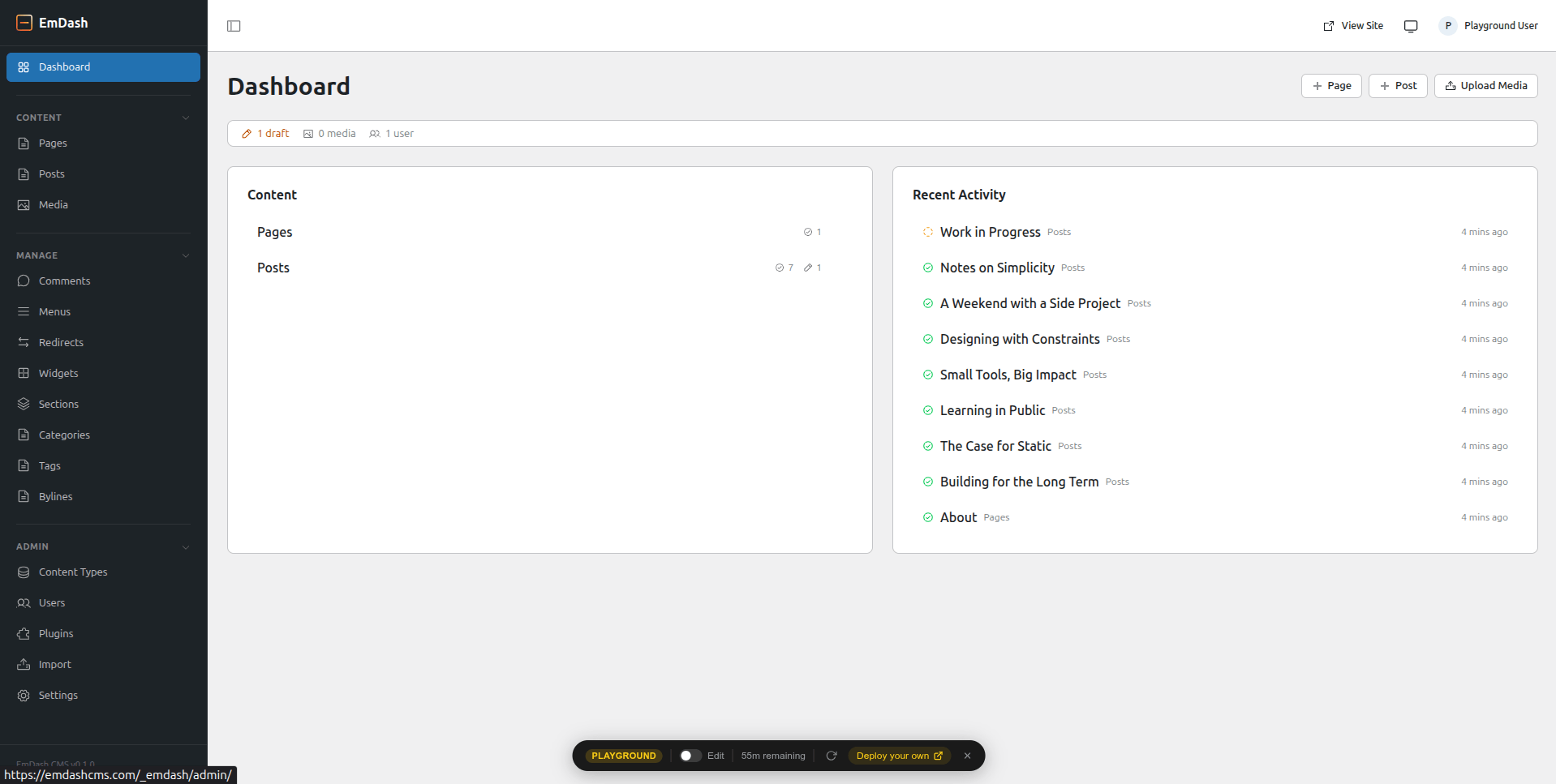
Cloudflare released its own CMS on April 1st and some thought it was an April Fool’s Day joke. Which I thought was a curious response.
Why would anyone think that about a serious project?
There’s already a ton of analysis, both about the CMS and the motives surrounding its creation. So I’m going to leave that to more capable peeps.
I will, however, quickly list my own key takeaways from what I’ve gathered so far.
Cloudflare
- They spent 2 months vibe coding the project
- Specifically targeted the WordPress ecosystem
- Motivated by plugin security
- AI first platform
- Based on Astro
Matt Mullenweg
- Doesn’t solve the plugin problem
- There is no plugin security problem (It’s a feature!)
- Why is everyone building CMS’s named ‘Matt’?
- It’s not a WordPress replacement
- I love Cloudflare, and “Good luck with that”
The Pundits
Some quick thoughts on the few posts I’ve read from others weighing in…
Joost DeValk
I first heard of Astro when Chris Lema, a longtime WordPress advocate I’ve followed, mentioned that he was moving his blog off WordPress to Astro. But his was for experimental R&D purposes as he is diving deeper into AI. He was wasn’t abandoning WordPress. Yet?
Then Joost (Mr Yoast SEO, that is) recently posted about moving his personal blog off WordPress to Astro. I start noticing. He also provides his take on EmDash and states his commitment to building on it.
Joost has been in the spotlight recently with his break from Matt M and leadership involvement with the FAIR project. That has turned out to be a much more challenging proposition than anticipated. In an ironic way.
RegionallyFamous
I landed on this site because I was playing around with Telex. And so was this person. You can read about it here (soon).
I don’t honestly don’t know anything about this site or the person behind it. I just absorb the content and see where it goes. It made me think. Which, in my book, is what makes it good.
The author echoes Matt M in that Cloudflare isn’t really solving the plugin issue – which does exist. The article also makes the point that the solution doesn’t involve ‘burning down the house’ and goes on to question Cloudflare’s true motives – selling more of its services.
This last bit seems to come up often elsewhere. Read on.
Cybernews
This is another site that isn’t part of my regular feed. But I found their commentary interesting, especially from a security POV.
The bulk of the post unpacks Cloudflare’s release. But the last quarter of the article highlights detraction from the techosphere. Particularly from HackerNews.
HackerNews
The discussion on HN is always interesting, as many forums tend to be. I find the linkbacks to sources helpful.
To me, the standout comment on this thread was…
But of course, then they wouldn’t be able to sell their own “workers” product, so suddenly I think I might understand why they built it the way they built it, at the very least to dogfood their own stuff.
My Thoughts
Going back to Joost and the FAIR project, I think there are some organizations who see the rift in the Automattic vs WP Engine saga as an opportunity to break into a huge market held by WordPress.
Nothing wrong with that. But the WP community, for the most part, is pretty tight and loyal. I think the better approach to gaining users is to remain neutral in the conflict, and simply highlight the main benefits your product offers. If you need to mention WordPress at all, be diplomatic.
Suspicions around any financial motivations is going to be excavated. So might as well earn trust and transparency points by putting that one right on the table.
EmDash is also deeply AI centric. Great for devs and tech geeks. Not so much the average user. Like the small business owner. As I once wrote somewhere, spinning up a WordPress site is easy. But then the pain starts.
And are we getting close to AI fatigue yet?
The biggest hurdle mentioned by RegionallyFamous, that I think is spot on, is the mature WordPress ecosystem. Of EmDash, he notes…
It also has zero plugins. Zero themes. Zero ecosystem. Against WordPress’s 70,000+ plugins, two decades of documentation, and 43% of the web.
That is the real mountain ahead of Cloudflare’s EmDash. How soon it will scale the peak with AI remains to be seen.